

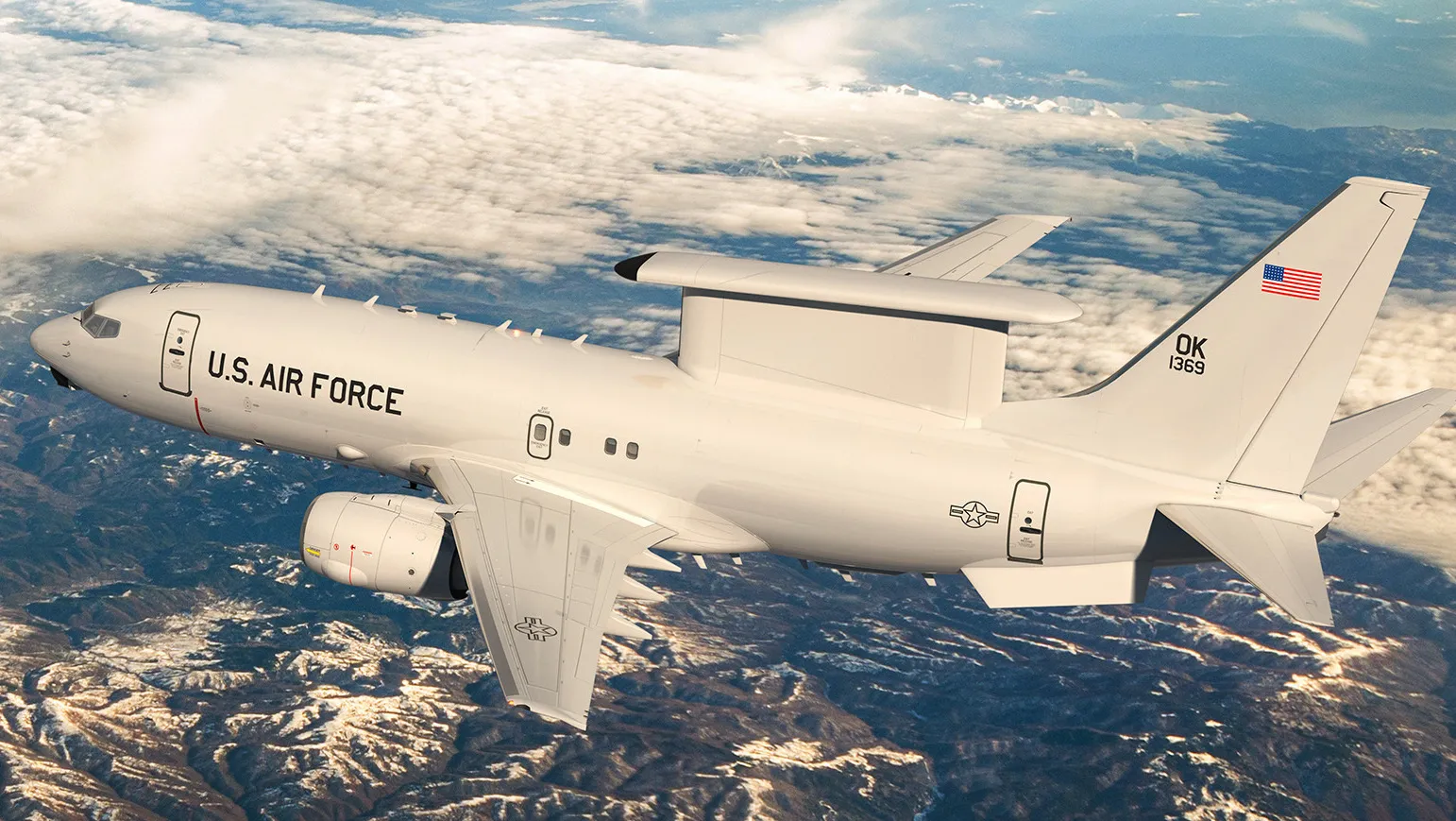
CANBERRA— The Australian government has announced the deployment of a Royal Australian Air Force E-7A Wedgetail early warning aircraft to the Middle East as tensions escalate following Iranian missile and drone attacks across the Gulf region. The deployment aims to strengthen airspace monitoring and provide advanced surveillance capabilities for allied forces.
Canberra confirmed that the aircraft from the Royal Australian Air Force’s No. 2 Squadron will support regional air defense efforts for an initial four-week period. The mission will operate alongside coalition logistics routes and military aviation movements passing through the Gulf.
Wedgetail Surveillance Mission
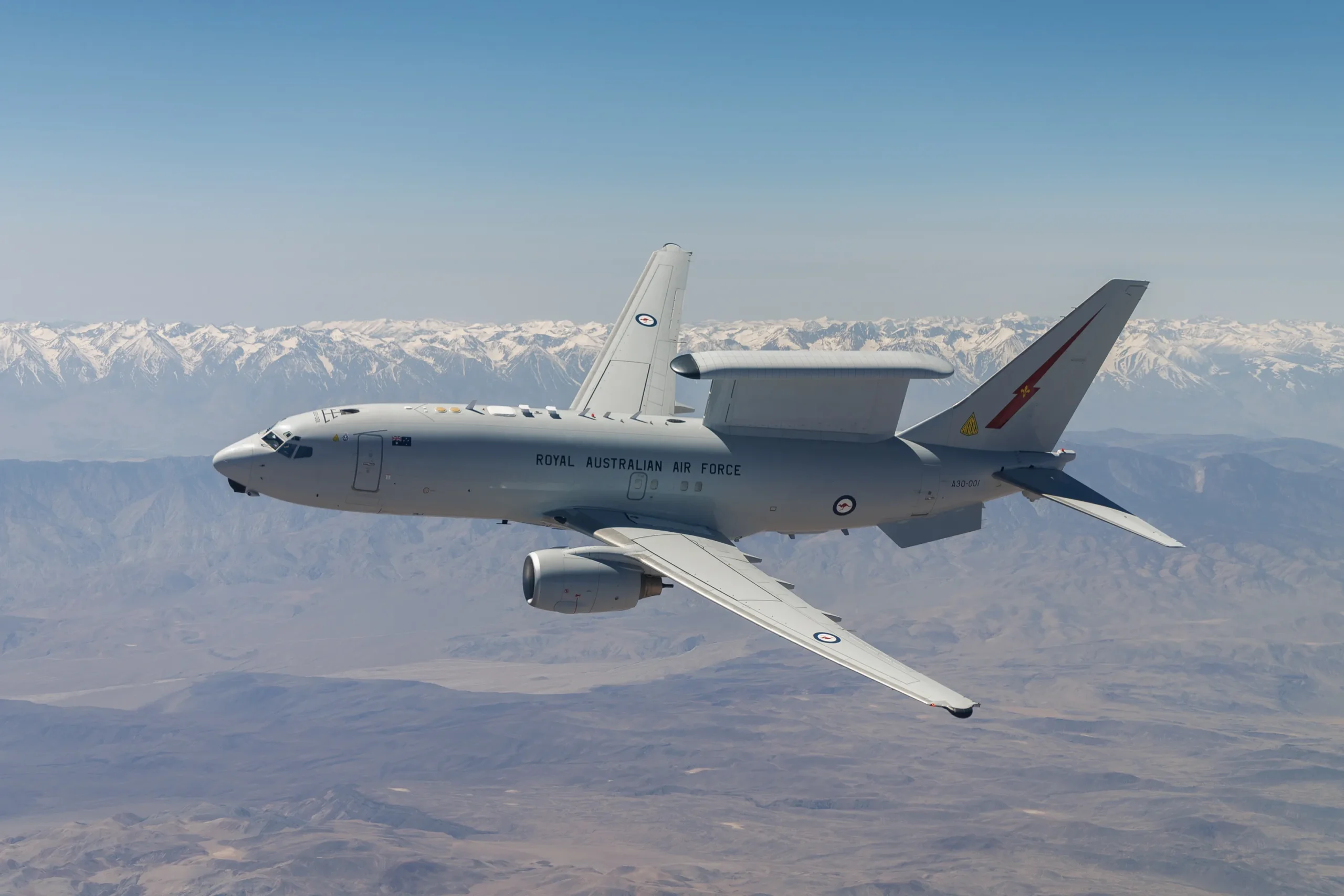
The E-7A Wedgetail is one of the most advanced airborne early warning and control aircraft in operation today. Equipped with a powerful multi-role electronically scanned radar, the aircraft can monitor large sections of airspace and track multiple aerial threats simultaneously.
Australian defense officials said the platform will provide long-range reconnaissance and airspace management capabilities across the Gulf. This capability allows allied aircraft and ground defenses to detect incoming missiles, drones, and hostile aircraft much earlier.
The deployment will support efforts to secure regional airspace and protect civilian and military aviation routes. Defense analysts believe the aircraft’s advanced sensors will significantly enhance early warning coverage during ongoing security operations.

Missile Stock Support
Australia also confirmed plans to help replenish the United Arab Emirates’ stockpile of AIM-120 Advanced Medium-Range Air-to-Air Missiles. These beyond-visual-range missiles are widely used by modern fighter aircraft for long-distance aerial combat.
According to Defense News, the missiles are expected to support UAE Air Force fighter jets such as the F-16 Block 60, which rely on the weapon for intercept missions against aerial threats.
The UAE has already intercepted more than 1,500 Iranian rockets and drones since the start of the current conflict.
Australia previously received approval to acquire hundreds of newer AIM-120 missile variants. Officials indicated that older missile variants currently in Australian inventories may be transferred to support Gulf air defense operations.
Regional Deployment
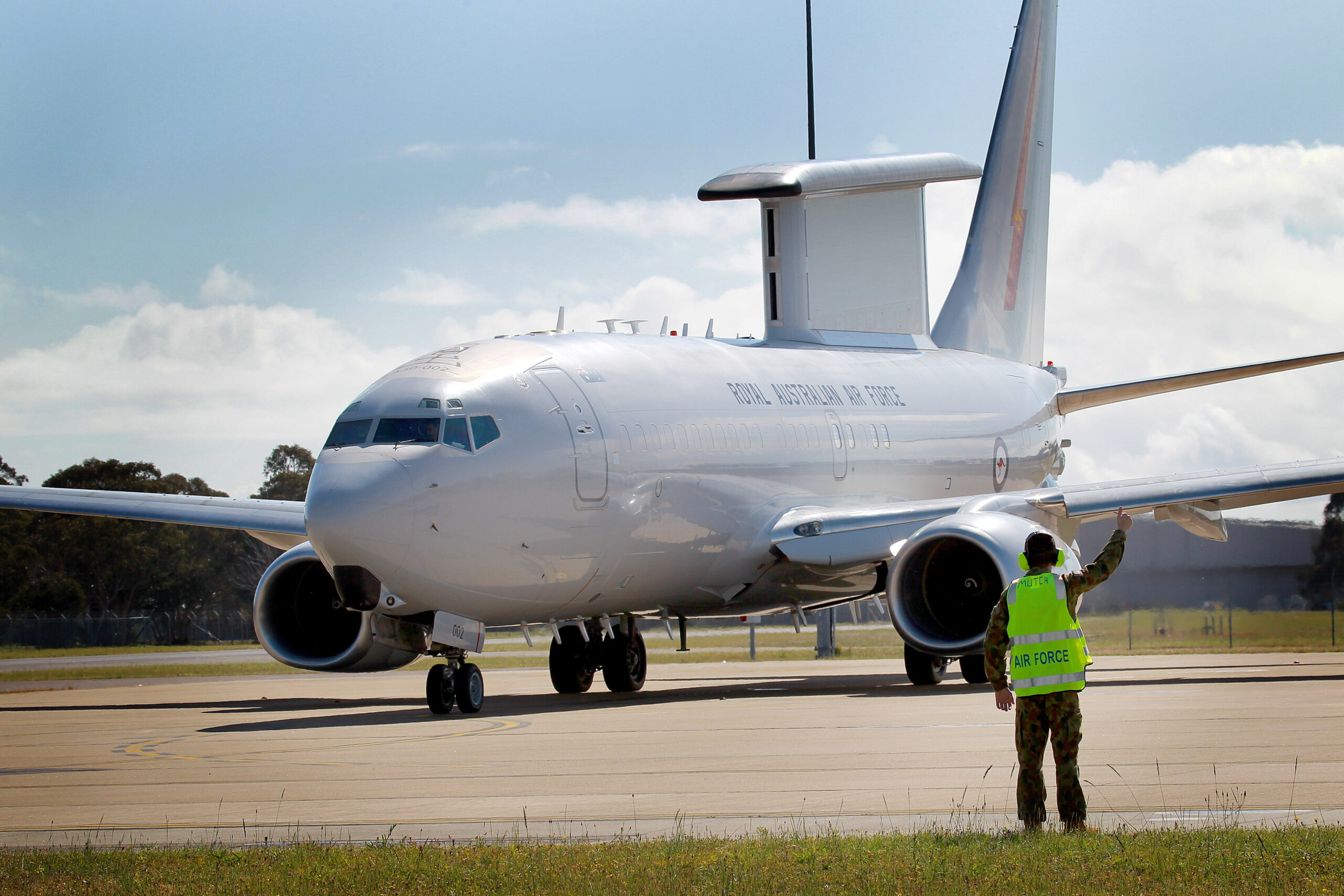
The Wedgetail aircraft is expected to operate from an established coalition facility in the Gulf region. Analysts believe Al Minhad Air Base near Dubai is a likely location due to Australia’s long-standing military presence there since 2003.
Australian airborne early warning aircraft have conducted several overseas missions in recent years. One deployment to Europe supported Ukraine for six months and included 45 operational sorties, with one mission lasting more than 17 hours.
The aircraft also played a major role in coalition operations against the Islamic State group between 2014 and 2020. These missions demonstrated the platform’s ability to manage complex air operations across large geographic areas.
In addition to the Wedgetail deployment, Australia is sending approximately 85 military personnel to the Middle East.
Canberra also recently deployed a C-17A strategic transport aircraft and a KC-30A aerial refueling tanker to support logistics and air operations.

Australian Personnel Present During U.S. Naval Strike
Three Royal Australian Navy sailors were aboard a United States Navy submarine during the sinking of the Iranian frigate IRIS Dena on March 4. The incident marked the first confirmed U.S. submarine torpedo attack against an enemy combatant since World War II.
The attack occurred near Sri Lanka (CMB) and involved a U.S. submarine reportedly linked to operations around HMAS Stirling naval base, Perth (PER). Prime Minister Anthony Albanese confirmed the Australians were present but stated they did not take part in offensive action.
The Australian government confirmed that three members of the Royal Australian Navy were onboard a U.S. Navy submarine when it attacked the Iranian frigate, IRIS Dena.
Prime Minister Anthony Albanese acknowledged the presence of the Australian sailors after growing public interest. He emphasized that while they were embedded on the vessel, none were involved in combat actions during the strike.
According to Albanese, long-standing defense cooperation agreements allow Australian Defence Force personnel to serve aboard allied military platforms. These arrangements require that embedded personnel operate strictly under Australian law and policy.
He also noted that safeguards exist to ensure Australian personnel do not participate in military actions that Canberra has not authorized.
How Embedded Military Programs Work
Australia and the United States maintain exchange and embedding programs across several military branches. These programs allow personnel to train, gain operational experience, and support allied forces.
In the submarine domain, these placements have become increasingly important as Australia prepares to operate nuclear powered submarines under the AUKUS security pact.
Defense analyst Jennifer Parker, founder of Barrier Strategic Advisory, explained that Australian sailors could easily avoid participating in combat operations if required. They may simply leave operational consoles or remain outside the control room during engagements.
Parker also noted that the target itself was lawful under the law of naval warfare. Warships belonging to states engaged in an international armed conflict are considered legitimate military objectives.
International maritime law also allows such attacks in waters beyond the 12 nautical mile territorial limit of neutral states. The strike reportedly took place outside Sri Lanka’s territorial waters.

Political Reaction in Australia
The incident quickly sparked political debate in Canberra. Greens senator David Shoebridge argued that Australia risked becoming indirectly involved in a broader conflict. He criticized the AUKUS partnership and suggested the arrangement could pull Australia into wars led by the United States.
The Albanese government rejected these claims, stating that Australian personnel embedded with allied forces remain bound by national legal frameworks.
Officials stressed that participation in allied training or operations does not mean Australia is a direct party to the conflict.
AUKUS and Submarine Training Expansion
The presence of Australian submariners on U.S. vessels reflects a broader effort to prepare for the AUKUS submarine program.
Under the trilateral agreement between Australia, the United Kingdom, and the United States, Australia will eventually operate nuclear powered submarines designed to strengthen deterrence in the Indo Pacific.
To prepare for this transition, Australian sailors have been rotating through training assignments on U.S. Navy nuclear powered attack submarines.
In October, Australian officials confirmed that more than 50 sailors were already serving aboard American submarines. Rear Admiral Stephen Hughes later revealed that roughly 160 to 200 Australian sailors were undergoing submarine-related training in the United States and the United Kingdom.
These placements allow Australian crews to gain practical experience operating nuclear-powered submarines long before Australia receives its own vessels.
Balancing Current and Future Submarine Fleets
While preparing for nuclear submarines, the Royal Australian Navy must still maintain its existing fleet of six Collins-class conventional submarines.
Rear Admiral Hughes described the transition as a complex challenge. The Navy must keep the Collins fleet operating at full capability while simultaneously building a workforce for nuclear submarine operations.
Training sailors on advanced nuclear-powered submarines requires years of technical preparation. At the same time, Australia cannot reduce operational readiness in its current submarine fleet.
Defense analysts say the training program remains essential to ensure Australia has experienced crews ready when the first Virginia-class submarines arrive.
Stay tuned with us. Further, follow us on social media for the latest updates.
Join us on Telegram Group for the Latest Aviation Updates. Subsequently, follow us on Google News
